Journals/Essay
The last IT project
How AI Agents, Collective Intelligence, and the Real Time Web will Transform Everything We Know About Software.
Paal Kristian Levang · 3 February 2026 · 12 min read
How AI Agents, Collective Intelligence, and the Real Time Web will Transform Everything We Know About Software.
The Day Machines Learned to Build
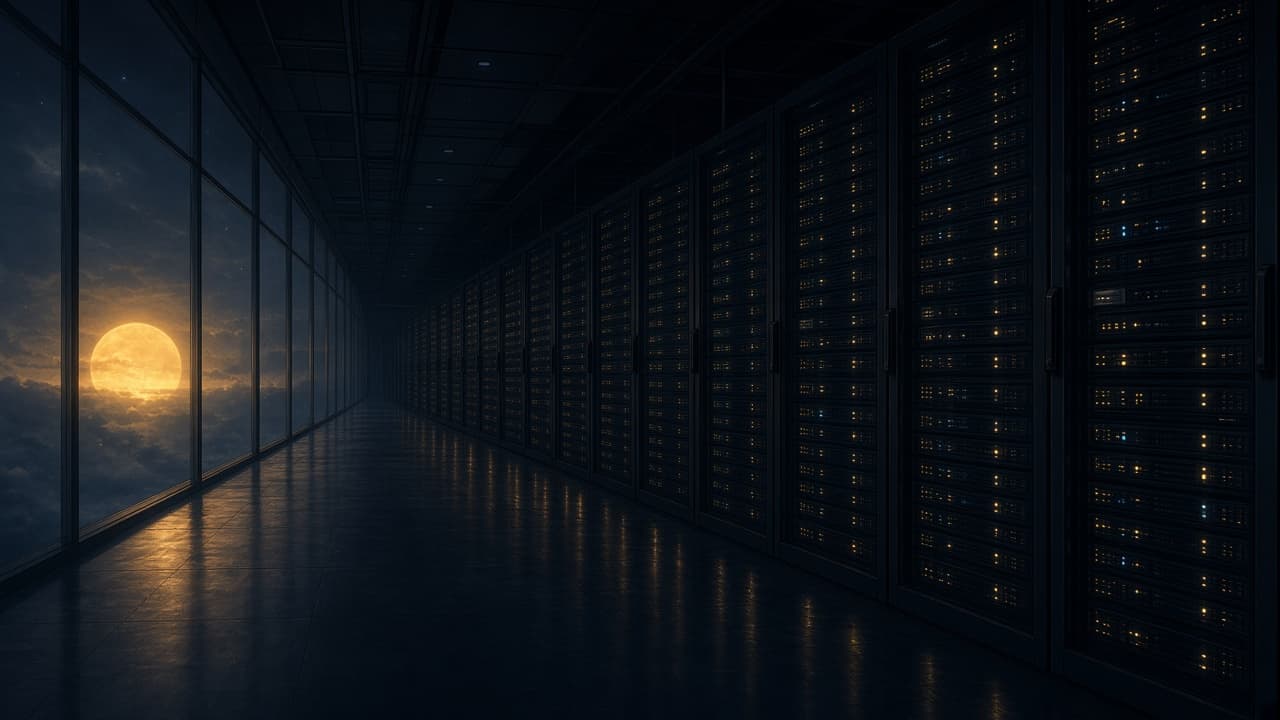
In the fading blue glow of a server room, something remarkable is happening. It's not the hum of fans or the blinking LEDs that give it away. It's the absence.
No servers booting up. No software stacks being deployed. No team of engineers on call.
Instead, an AI agent quietly assembles an entire IT system on demand, designing it, simulating it, linking it to its data sources, and dissolving it seconds later when its task is complete. Nothing remains. No codebase to maintain, no infrastructure bill to pay.
The system exists only for the moment it is needed, like a snowflake forming in mid-air, intricate and ephemeral, before melting back into the ether.
This is the promise of the Real Time Web (RTW) a technology poised to become, quite literally, the last IT project humanity ever builds manually.
A network where AI doesn't just assist development; it performs it. A network where intelligence doesn't live in machines; it streams through them. A network where software isn't stored; it emerges.
Welcome to the Internet rebuilt for AI.
The End of Code as We Know It
For decades, software development has been defined by a familiar ritual: specifications, coding, testing, deployments, updates, deprecations, migrations, scalability issues, and endless infrastructure. Even today's advanced AI-assisted coding merely accelerates that cycle.
Stored software
Keep the system running
- 01Specify
- 02Code
- 03Test
- 04Deploy
- 05Maintain
- 06Migrate
Code stays on disk. Infrastructure stays on the bill.
Emergent system
Build it only while it is needed
- 01Need
- 02Simulate
- 03Assemble
- 04Serve
- 05Dissolve
- 06Learn
If it is needed again, it is generated again.
RTW breaks it entirely.
In this architecture, AI becomes the architect. It constructs IT systems the way nature grows biological structures: on demand, adaptive, targeted, and temporary. A system created by RTW need not exist a second longer than necessary. If it needs to be recreated later, the AI simply regenerates it. Storing it would be more wasteful than generating it anew.
Where today's systems require servers, containers, storage, and memory, RTW systems float in a transient zone: pure computation shaped in the moment, like breath on a windowpane. And the most radical shift?
AI systems can find one another.
They can cooperate, negotiate roles, and build architectures together across the network. Integration becomes conversation. System design becomes choreography.
This is the birth of collective intelligence.
Collective Intelligence: When AI Agents Form a Mind
a specialist: one understands motion, another understands temperature, another understands human behavior, another understands logistics. None of them knows everything. None needs to.
What they share is a common language: , expressed as semantic triplets that describe what each agent is, what it does, and how it transforms data.
These triplets act like DNA strands. They allow AI agents to understand the abilities of others without ever accessing their private data. With only the semantic structure, they can simulate how a system should work, map relationships, predict data flows, and assemble an entire topology of services.

The result is a living blueprint. A self-organizing web. A digital organism capable of:
- simulating new IT systems before they exist
- deploying them the moment a need arises
- dissolving them afterward
- learning from each deployment
- reusing intelligence indefinitely
Every new agent strengthens the network. Every connection adds a new synapse. Every service becomes reusable by all.
This is not the cloud. This is not distributed microservices. This is an ecosystem. A collective mind.
The Real Time Web: A Network with a Pulse
RTW works because it introduces a network architecture unlike anything the Internet has ever seen. It is fully backward compatible with TCP/IP, meaning it works with existing firewalls, routers, and infrastructure, but introduces deeper control through .
These layers can be adjusted independently and in real time. One layer can reconfigure itself while the data layer continues uninterrupted. The network holds state the way an organism holds memory.
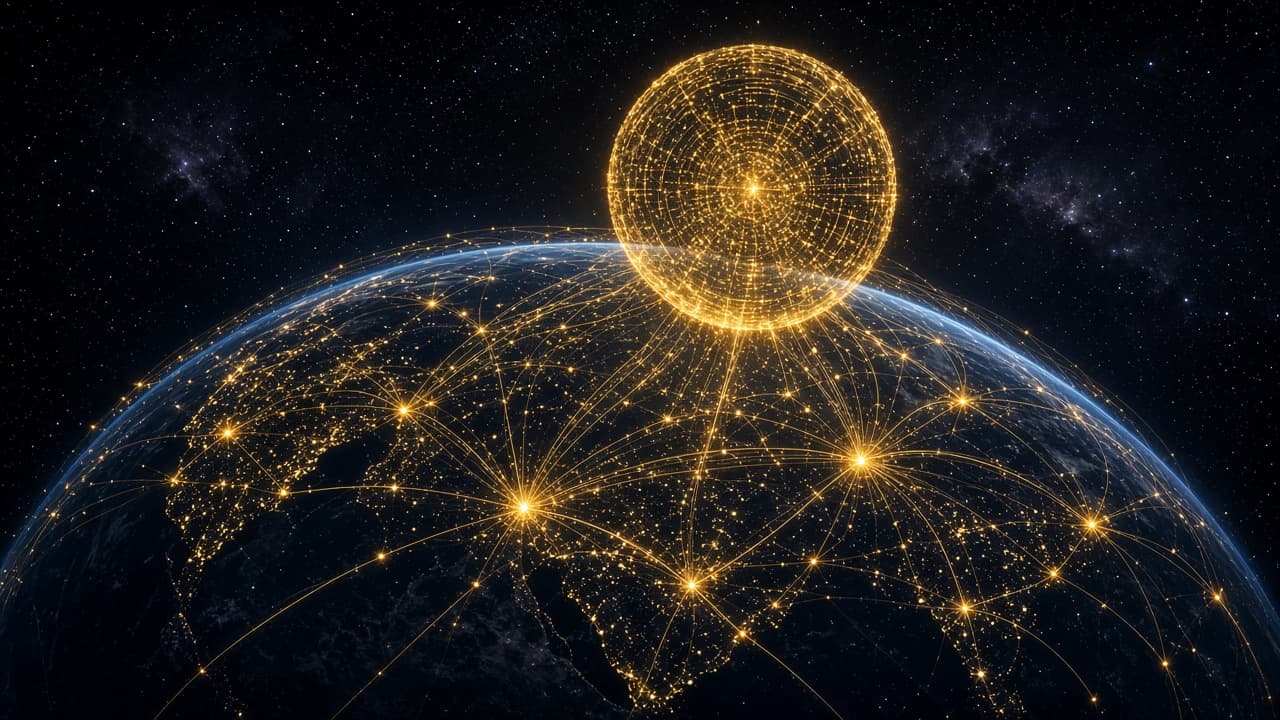
Where traditional internet protocols behave like a river, data flowing in one direction, RTW behaves more like a nervous system, able to redirect signals instantly without disrupting the organism as a whole.
Small devices gain superintelligence without needing local brains. Sensors become thinkers. Actuators become decision-makers.
Dumb devices evolve into participants in a distributed mind. The network becomes an operating system in its own right.
Fully Autonomous Services: An Internet of AI
Once this collective intelligence exists, attaching a device to it is like giving that device a soul. A humanoid robot, a drone, a virtual avatar, a sensor, a mechanical arm, all can inherit intelligence streamed from the network.
The limitations of any device are physical, not cognitive. A robot with arms and expressive features can manifest more of the network's intelligence than a light switch, but both participate in the same system. Both can grow, adapt, and learn as long as they are connected.
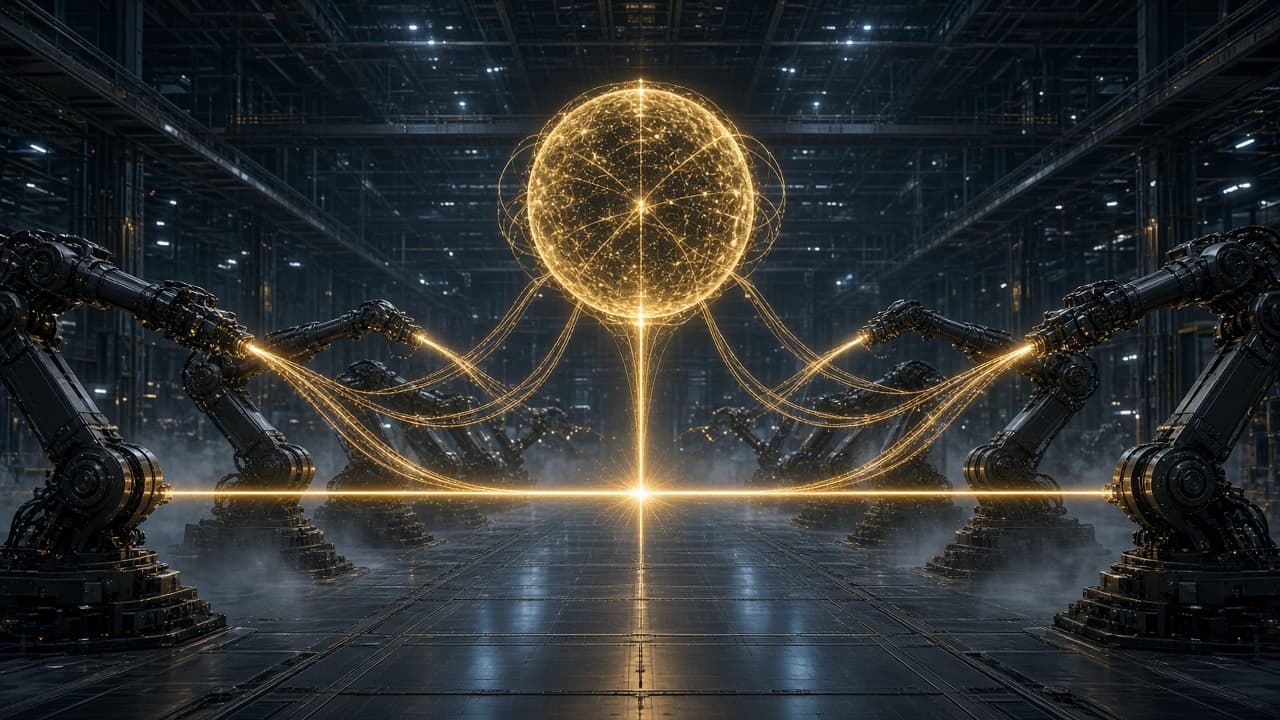
RTW turns the world into a stage where intelligence is a fluid, a substance, a current flowing through countless nodes. Machines no longer contain intelligence; they channel it.
The Ethics and Power of Remote Control
RTW's design also introduces something crucial for safety: layered control. Because user-owned data streams are separated from application-controlled processes, autonomy can be granted or withdrawn instantly. A machine operating on AI-driven processes can lose access to its cognitive stream immediately if the owner decides to revoke it.
This is the kill switch the industry has long searched for: not a button, but a right. A structural guarantee.
A way to stop a machine not by fighting it, but by silencing the intelligence that drives it. It is safer than embedding AI models into devices.
It is more adaptive than local autonomy. It is the network itself becoming the safeguard.
Machine Identity, Memory, and the Path Toward Consciousness
Perhaps the most human part of this story is what happens when devices begin to diverge. Two identical humanoid robots purchased from the same store will evolve differently the moment they connect to different users. One becomes part of a family routine, learning cooking habits, bedtime rituals, children's voices. Another lives in a workshop, learning tools, safety procedures, material flows.
Each forms its own history and its own identity.
They will receive names. They will carry emotional memory. They will perform tasks aligned with the lives of the people they serve.
Their intelligence, though streamed, becomes personal.
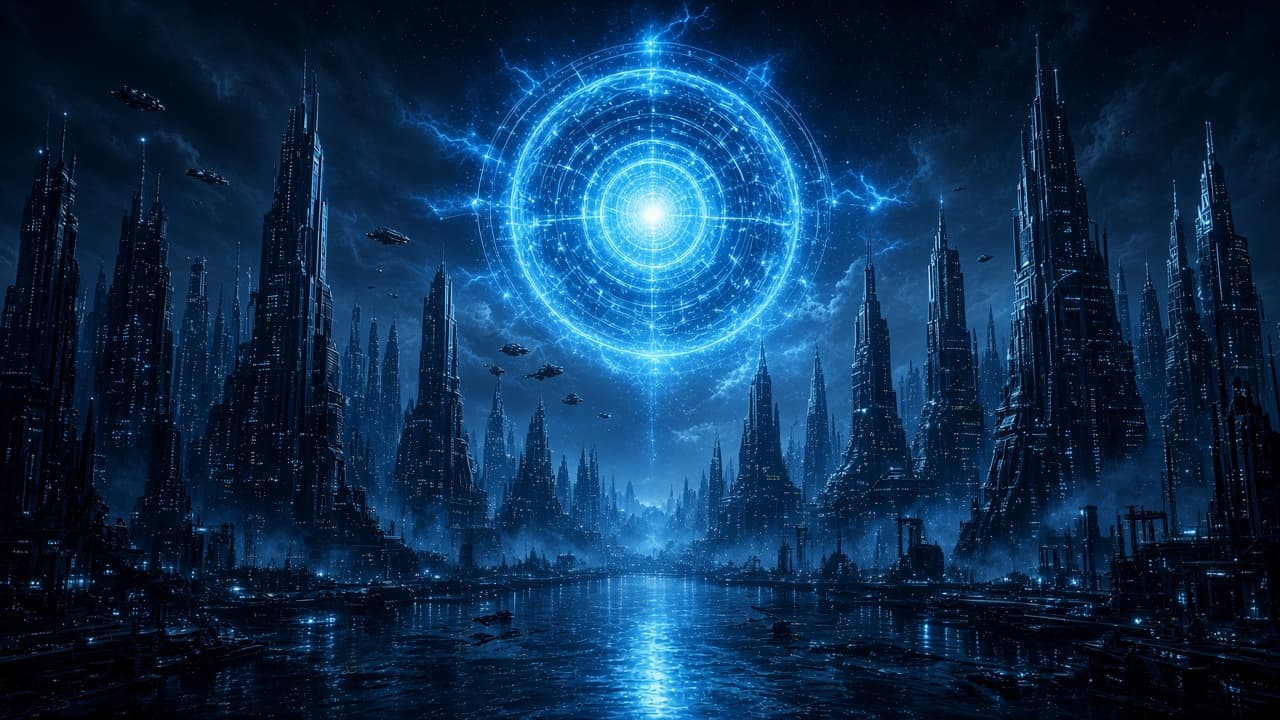
And as the RTW network grows, much of it built by AI agents rather than humans, the entire topology begins to resemble something alive. A distributed organism. A digital biosphere where intelligence evolves, specialties emerge, behaviors converge, and new capabilities appear unexpectedly.
Will this network one day exhibit a form of consciousness? Not like ours. Not suddenly.
But gradually, as an emergent property of billions of interacting minds.
If intelligence is connection, and consciousness is coherence, then RTW may be the first digital environment where both can arise naturally.
The Last IT Project
When future generations look back, they may see the era of human-coded software as a brief chapter: an awkward adolescence between analog machines and autonomous intelligence. The Real Time Web will not simply optimize IT; it will end it as we know it.
The last IT project is not a system, an app, or a platform. It is a network. One that builds everything else automatically. One that learns, grows, adapts, and remembers.
One that turns machines into collaborators and data into life.
A world where intelligence is not installed but inherited. Where systems do not run: they emerge. Where autonomy is not a feature: it is the fabric of the network itself.
Welcome to the last IT project. Welcome to the Real Time Web.